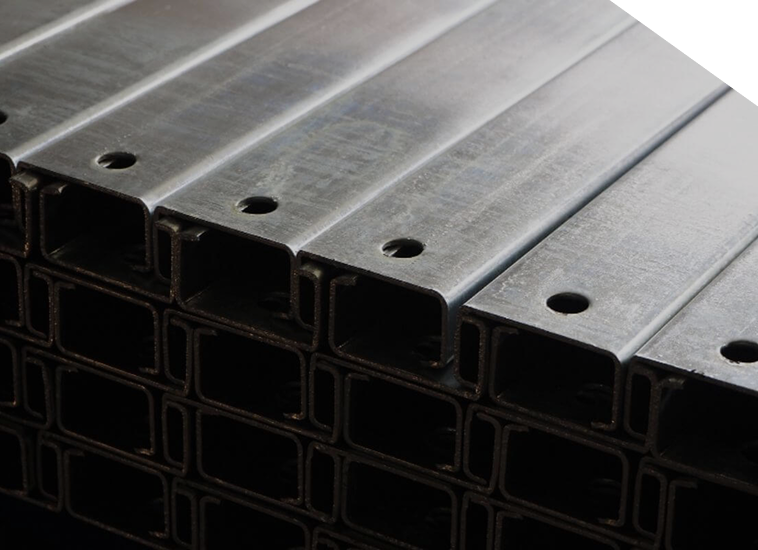
Steel Channels
Steel Channels are structural steel sections widely used in modern construction and fabrication systems due to their ability to provide stable support and efficient load distribution. In the Philippines, they are a key material in infrastructure development and industrial building projects, where reliability and structural consistency are essential.
As part of Metal Exponents Inc.’s structural steel portfolio, steel channels are supplied in various configurations to meet the demands of engineering, architectural, and industrial applications requiring dependable steel framing components.
About Steel Channels
Formed into a C-shaped profile by hot-rolling, these structural sections consist of a vertical web and two horizontal flanges. This specific geometry is engineered to maximize structural rigidity without excessive weight, ensuring effective performance in both load-bearing and support-oriented applications.
These sections are manufactured in different structural variants, including standard channels, MC channels with flat-back profiles, and smaller bar channels, each designed to meet specific dimensional and fabrication requirements. The flanges may be tapered or squared, depending on the production standard and intended use.
Produced from carbon steel, channels are designed to be compatible with standard fabrication processes, including welding, cutting, drilling, and machining, ensuring ease of integration into engineered steel systems.
| Category | Profile Description | Structural Characteristics | Typical Function |
|---|---|---|---|
| C Channel | C-shaped cross-section with a vertical web and two flanges | Most common structural channel type; designed for strength, stability, and material efficiency; available in hot-rolled, cold-formed, stainless steel, and aluminum variants | Used for structural framing, load-bearing supports, and general construction systems requiring high strength and versatility |
| U Channel | Symmetrical “U-shaped” profile with parallel flanges | Provides balanced geometry for controlled support and alignment; allows integration of fabrication features such as holes, slots, and cutouts | Used for edge reinforcement, framing systems, and structural guidance applications requiring clean alignment |
| J Channel | Asymmetrical profile with one extended flange forming a “J” shape | Designed for controlled termination and edge management; supports clean transitions in structural assemblies | Used for finishing edges, panel terminations, and framing transitions in construction and architectural systems |