Every pipeline, whether delivering clean water to communities or carrying industrial fluids under pressure, is only as dependable as the materials it's made from over extended periods of use.
Ductile iron pipes and fittings are widely used in systems that require dependable fluid transport across demanding environments. From water distribution to industrial processing, these components are designed to maintain performance under stress. That’s why only materials engineered for strength, flexibility, and corrosion resistance can support the long-term demands of modern infrastructure.
Metal Exponents, a long-standing importer and supplier of industrial materials in the Philippines, provides premium ductile iron pipes and fittings sourced from reputable global manufacturers. Our products are tested and verified against ISO, ASTM, and PNS standards, combining rigorous quality assurance with proven material performance to keep pipeline systems running safely and efficiently.
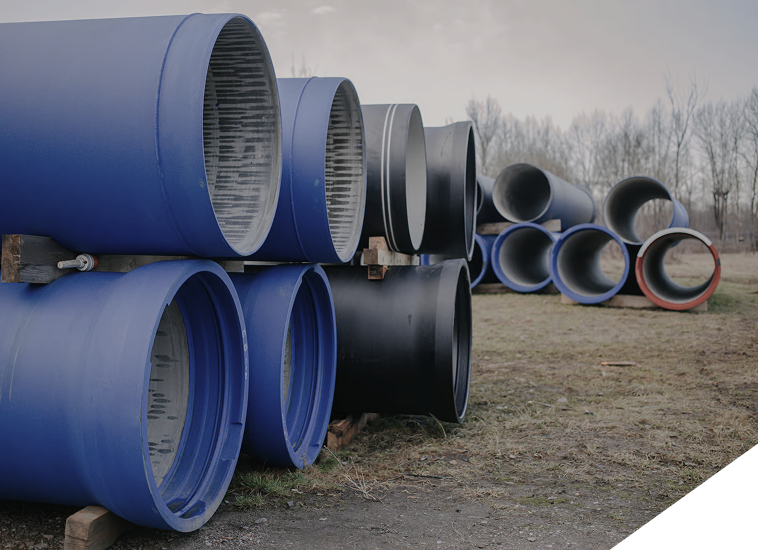
Ductile iron pipes are built to carry fluids under pressure while maintaining structural reliability over time. Made from nodular cast iron, they offer a balance of strength and flexibility that allows them to handle both internal force and external stress without cracking.
Through a controlled casting process, the material develops a microstructure that improves tensile capacity and resistance to sudden impact. This makes the pipes suitable for installations where ground movement, load variation, or pressure changes are expected.
They are widely used in water distribution lines, sewer systems, and industrial transport networks where consistent flow, long service life, and minimal failure risk are critical to operations.
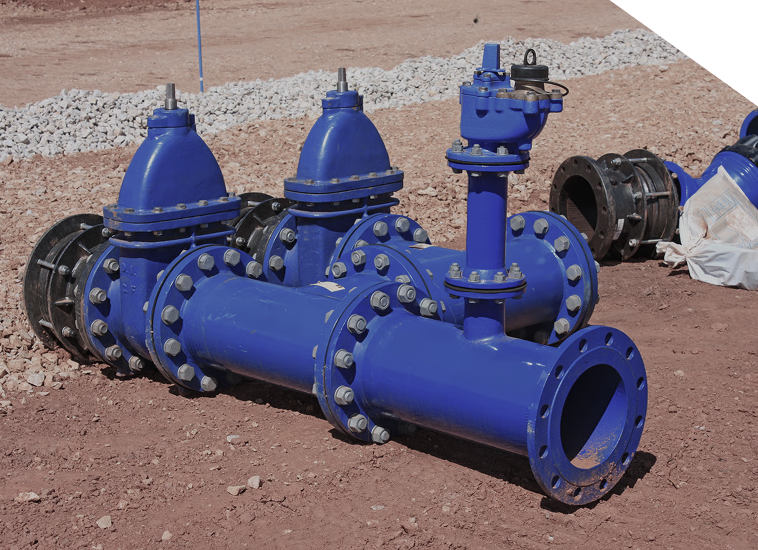
Ductile iron fittings are designed to complete the system—guiding flow, connecting pipe segments, and maintaining alignment across complex layouts. Rather than focusing on transport, their role is to ensure that the entire pipeline functions as a single, stable network.
These components come in various configurations such as bends, tees, reducers, and flanges, each serving a specific purpose in directing or adjusting flow paths. Built to match pipe standards, they allow seamless integration while maintaining tight, secure connections.
To support long-term use, fittings are typically protected with internal linings and external coatings, helping preserve performance in demanding environments. Combined with flexible jointing options, they enable efficient installation and reliable operation across water systems, industrial lines, and infrastructure projects where connection integrity is just as important as pipe strength.